Powered By Blogger

Wednesday, March 13, 2019

Minimal Archaeologists


Image result for mr bean archaeologists


by

 Damien F. Mackey


“As someone who studies ancient inscriptions in the original, I have a responsibility to warn the lay audience that the new fad (revisionism)
represented by Philip Davies and his ilk is merely a circle of dilettantes”.

Professor Anson F. Rainey


This is the html version of the file http://meforevidence.googlepages.com/TheBibleasHistory.ppt.

Google automatically generates html versions of documents as we crawl the web.


THEBIBLEHISTORYAND ARCHEOLOGY

Part 2


If Moses did not really lead God’s people out of Egypt, as described in the book of Numbers, then the Law of Moses is a man-made tradition.

If David was not the anointed ruler of Israel, then Jesus, the Son of David, was a pretender to a false legacy.

If the stories of Abraham, Isaac, Jacob and Joseph are just the creation of imaginative and pious Jews in the second century BC, then Paul’s statement in Romans 4:16,17 concerning Abraham, “He is the father of us all. As it is written: I have made you a father of many nations.” becomes meaningless. John Oakes


Damien Mackey comments: For a more satisfactory historico-archaeological setting for Abram (Abraham), see e.g. my multi-part series, beginning with:


Abraham a poor fit in Middle Bronze I Age


https://www.academia.edu/31214551/Abraham_a_poor_fit_in_Middle_Bronze_I_Age._Part_Four_Abraham_s_contemporaneous_Egypt


For Moses as an historical figure, see e.g. my article:


Historical Moses may be Weni and Mentuhotep


https://www.academia.edu/36803542/Historical_Moses_may_be_Weni_and_Mentuhotep


For a revised David and Solomon, see e.g. my article:


Solomon and Sheba


https://www.academia.edu/3660164/Solomon_and_Sheba


TheBibleasHistory article continues:


Let us say it very clearly, if the events recorded in the Old Testament are just religious stories with little or no basis in fact, then both the Old and the New Testament lose nearly all their meaning, and Christianity becomes a man-made religion.

Do not be deceived. This is the view of a vast number of the intellectual elite, and believe it or not, even of many supposed Christian theologians today.

HISTORICAL AND ARCHAEOLOGICAL EVIDENCE by John Oakes

http://www.evidenceforchristianity.org/efc/default.nsf/Article/1B926074A2C7814D88256FF800513A3D?OpenDocument


On the Hebrew Passover in 2001“Rabbi” David Wolpe of Los Angeles stated that "the way the Bible describes the Exodus is not the way it happened, if it happened at all."

Wolpe made his declaration before 2,000 worshippers at the Conservative Sinai Temple, and the speech was reported on the front page of the Los Angeles Times. The article entitled, "Doubting the Story of Exodus," asserts that archaeology disproves the validity of the Biblical account.


Michael Lemonick (majored in Journalism) wrote for TIME magazine : "... much of what is recorded in the Bible is at best distorted, and some characters and events are probably totally fictional. Most scholars suspect that Abraham, Isaac and Jacob ... never existed“.

In a similar vein, professor Gunnar Heinsohn (Masters Sociology) of the University of Bremen has written

“Mainstream scholars are in the process of deleting Ancient Israel from the history books. The entire period from Abraham the Patriarch in the -21st century (fundamentalist date) to the flowering of the Divided Kingdom in the -9th century (fundamentalist date) is found missing in the archaeological record.

http://www.specialtyinterests.net/old_kingdom.html....”


Minimalists and Maximalists


  • Minimalists do not believe that the Bible is historical. Most believe that most of the Old Testament was created during the Persian Empire. Maximalists however believe the Bible is historical but is not inspired.


MINIMALIST OR REVISIONIST

ISRAEL FINKLESTEIN

WILLIAM DEVER

THOMAS THOMPSON

PHILIP DAVIES


To the right are some popular minimalists (sometimes called Revisionists). However, one has changed his mind based on extensive evidence.

William Dever

Dever, who once did not believe the Bible was historical, now believes much of it is. Although Dever is not a minimalist or a maximalist, he seems to be more objective when he sees the evidence. He also points out how his former peers are not being objective with the evidence. He has now written a book on the Historical Israel

Prof. Israel Finkelstein is another famous minimalist who has written books on the history of Israel. He believes that the history of Israel (including the Old Testament) is just a fabrication of stories created in the Persian Empire.

One forward of his book reads:


“A revolution is happening in Biblical Archeology. Biblical Archeology is critically examining the Bible against the archeological record and is turning everything we thought we knew upside down. It may disturb many that hold strong political or highly conservative religious beliefs. This will be true of Christians, Muslims and Jews who interpret the Bible literally.

It will disturb many secular Zionists who justify modern Israel's existence and the proposed annexation of "Judah and Sumaria" based on the Biblical Texts. You can choose to believe this research or not. But it has profound implications for the Israeli Palestinian conflict. This article will review the theories of one of the foremost of these revolutionary Biblical archeologists -Israel Finkelstein. “


“Finkelstein has had an impact on radically revising the history of Israel in the 10th and 9th centuries BCE. He has transformed the study of history and archaeology in Israeli universities, moving from a "monumental" to a "systemic" study of the archaeological evidence.”


Yet, says William Dever, Ph.D. (a fellow revisionist) this new dating system "is not supported in print by a single other ranking archaeologist."


Prof. Israel Finkelstein, a revisionist, theorized a different dating system that places the construction of the gates 100 years after the time of Solomon.

Dovid Lichtman


Revisionists stubbornly dismiss as fictitious most historical aspects of the Bible. To them, the patriarchal period (Abraham, Isaac and Jacob) is all imagination, the story of Joseph and the sojourn in Egypt is fabricated, as are the Exodus and the desert wanderings. The conquest, settlement and united monarchy (Saul, David and Solomon) are mere "propaganda" to quote Philip Davies.


Marit Skjeggestad, a Scandinavian revisionist, said that on biblical history, "the archaeological record is silent."


"In fact," asserts Dever, "the archaeological record is not at all silent. It's only that some historians are deaf."

Revisionists evasive maneuvers are also too much for Dever. He said that this "is an example of the lengths to which scholars will go to avoid the obvious when it does not suit them."


Dever states:

None of the revisionists can or will write a history of any “Israel” in the Iron Age.

Davies denies the existence of either a “biblical” or a “historical” Israel, both being in his view post-modernism’s “social constructs”; and his putative “historical” Israel cannot be illustrated because he completely ignores the archaeological data, now our primary source. (He dismisses Mazar’s handbook in a single footnote as “irrelevant,” because it does not extend to his “Persian period Israel”; 1991:24, n. 4).


Dever continues: “Thompson attempted a 450-page History of the Israelite Peoples (sic) in 1992, which however he now repudiates as it is “after all hardly history, critically speaking, but rather just another rationalistic paraphrase for biblical Israel” (1997:178, 179). His 1999 400-page book The Mythic Past, despite its subtitle Archaeology and the Myth of Israel, has nothing whatsoever to do with modern archaeology. And the few pages devoted to Iron Age Israel (1999:158-168; 179-190 [23 pages]) scarcely even mention “Israel” by name, speaking rather of “southern Syria’s marginal fringe” or “the (Assyrian) province of Samarina.”


Dever sums up the attitude of objective scholars:

"In my view, most of the revisionists are no longer honest scholars, weighing all the evidence, attempting to be objective and fair-minded historians, seeking the truth. Determined to unmask the ideology of others, they have become ideologues themselves. The revisionist and the postmoderns are dangerous because they have created a kind of relativism -- an anything goes attitude -- that makes serious, critical inquiry difficult if not impossible."


In the words of Anson Rainey:

"As someone who studies ancient inscriptions in the original, I have a responsibility to warn the lay audience that the new fad (revisionism) represented by Philip Davies and his ilk is merely a circle of dilettantes. Their view that nothing in the biblical tradition is earlier than the Persian period, especially their denial of the existence of the united monarchy, is a figment of their vain imagination. The name 'House of David' in the Tel Dan and Mesha inscriptions sounds the death knell to their specious conceit. Biblical scholarship and instruction should completely ignore the (revisionist) school. They have nothing to teach us."


Most archaeologists are not minimalists like Israel Finkelstein.

The California Institute of Ancient Studies along with most Archeologists and Historians disagree with such skeptics. The few minimalist Dever-Finkelstein followers (one who authored "The Bible Unearthed") have been proven wrong simply because they have used the outdated Sothic Chronology.

Even on an ABC special, the archeologists did have some embarrassing moments such as when the founder of the famous Tel Dan inscription referring to the "House of David" showed that actual inscription to the cameras and laughed at the early attempts by the archaeologists to explain it away. David himself was grudgingly accorded a real existence, based largely on the Tel Dan evidence.

THE HOUSE OF DAVID
by
Damien Mackey


Gate at Tel Dan

In fact, the program's presenter himself came to be convinced that a massive altar on Mount Ebal in Samaria was the one that Joshua had built there (Joshua 8:30). Indeed it was made of "unhewn stones" (v.31), and the archaeological data discovered around this altar seemed to fit very well that this was indeed an ancient Israelite site of sacrifice.


THE HOUSE OF DAVID
by
Damien Mackey


Damien Mackey comments: “The House of David” article has since been up-dated.

TheBibleasHistory article continues:


Even a statement made by a true scholar on the subject, Prof. Adam Zartal, chairman of the Dept. of Archaeology at the University of Haifa who had this to say about history, archaeology and the Bible:


"After years of research, I believe it is impossible to explore Israel's origins without the Bible. At the same time, the research should be as objective as possible. The Bible should be used cautiously and critically. But again and again we have seen the historical value of the Bible.
Again and again we have seen that an accurate memory has been preserved in its transmuted narratives, waiting to be unearthed and exposed by archaeological fieldwork and critical mind work."


“Dr. and Professor Eilat Mazar is a third-generation Israeli archaeologist, specializing in Jerusalem and Phoenician archaeology. She has worked on the Temple Mount excavations, as well as excavations at Achzib and Bethlehem, and is a visiting scholar with the Institute of Archaeology AND the Hebrew University of Jerusalem.”

Dr. Eilat Mazar: Israeli Archaeologist / Discovered the King David's Palace in February 2005.

Alongside her laptop on a paper-strewn desk sits the most telling object: a heavily marked Bible. Like her grandfather and father before her, Mazar is a believer in the Bible’s historical reliability.

“One of the many things I learned from my grandfather was how to relate to the biblical text,” she says. “Pore over it again and again, for it contains within it descriptions of genuine historical reality.” She adds, “I work with the Bible in one hand and the tools of excavation in the other. That’s what biblical archaeologists do. The Bible is the most important historical source and therefore deserves special attention.”


Damien Mackey comments: For a different perspective on the archaeology of Jerusalem, though, see e.g. my multi-part series, beginning with:


Massive Challenge to Standard Geography of Jerusalem-Temple.


TheBibleasHistory article continues:


This approach led Mazar to the site she now believes is the northern edge of King David’s palace in an area known as the City of David. When she set out on her quest in search of the palace in 1997, she turned to her Bible. She looked in……

Second Book of Samuel chapter five, verse 17. “When the Philistines came to fight, the Bible says David went down from his palace to the fortress,” Mazar says. “I wondered down from where? It’s very reasonable to assume that when the Bible describes David going down he came from a higher place. The only higher place is from the north.”

It was a crucial observation. Mazar reasoned the only direction where the topography is higher would be just north of the City of David, outside the walls of the Old City. She began excavating in February of 2005. The finds came quickly. Surprisingly intact, just two yards beneath ground level, were Byzantine-era artifacts, including a fully-preserved room with mosaic floors dating to the 4th to 6th centuries C.E. When Mazar peeled back the room, she uncovered water cisterns, pools and a mikvah from the Second Temple period.

But it was what was under these that would prove to be the most startling. The Second Temple remains were directly on top of thick foundation walls that protruded in all directions—and even beyond—the length and width of her 30-by-10 meter excavation site.

The pottery found under the building—that is, from before the building’s construction—dated back to the 12th to 11th centuries B.C.E.—just before David conquered Jerusalem.

But inside one of the rooms, Mazar’s team found pottery from the 10th to 9th century B.C.E., indicating that the building was in use during the period of David’s reign in Jerusalem. In addition, Mazar found a seal impression, called a bulla, of a late 7th-century royal official named Jehucal, son of Shelemiah, son of Shevi, who is mentioned twice in the Book of Jeremiah (37:3 and 38:1). “The bulla find—it’s an amazing find,” she says, adding that it proves “that the site was an important center in the ancient Israelite monarchy for four centuries.”

Jeremiah 37: 3

And Zedekiah the king sent Jehucal the son of Shelemiah, and Zephaniah the son of Maaseiah, the priest, to the prophet Jeremiah, saying, Pray now unto Jehovah our God for us.

Jeremiah 38: 1


    • 1 And Shephatiah the son of Mattan, and Gedaliah the son of Pashhur, and Jucal the son of Shelemiah, and Pashhur the son of Malchijah, heard the words that Jeremiah spake unto all the people, saying,

  • 2 Thus saith Jehovah, He that abideth in this city shall die by the sword, by the famine, and by the pestilence; but he that goeth forth to the Chaldeans shall live, and his life shall be unto him for a prey, and he shall live.


Prof. Yigael Yadin, Dean of Archeology in the University of Jerusalem, has also further confirmed the Bible’s records in other areas of Solomon’s accomplishments. He was asked if archeology is was confirming the Biblical accounts. He replied:

“I would say, generally speaking, that this is very definitely so. I would say that the historical portions of the Bible are thus far being proved true by archeologists. I would go one step further, and say that a biblical diary has actually helped us archeologists find our way and understand the data.

The Bible tells us, for example, that King Solomon built three strategic cities. One is Megiddo, and one is Gezer, near Jerusalem. And we excavated Hazor, the third Solomonic city.

“Were it not for the passage in the Bible which tells us that Solomon built these three cities we would not have been able to identify them. The actual discovery of these gates proved that this example of a verse in the Bible was correct. Now this is only one example. Wherever we go in this land of the Bible we illuminate our finds with the Bible, and the finds, I would say, are illuminating the Bible.”

HAZOR

GEZER

MEGIDDO

Dr. David Rohl

"I consider the Bible a historical document just like the writings of Herodotus or a text of Rameses II," says Rohl. "It's ridiculous to throw it in the dustbin just because it's a religious text. If so strong a tradition evolves out of the past, it is likely to have a genuine geographical setting."

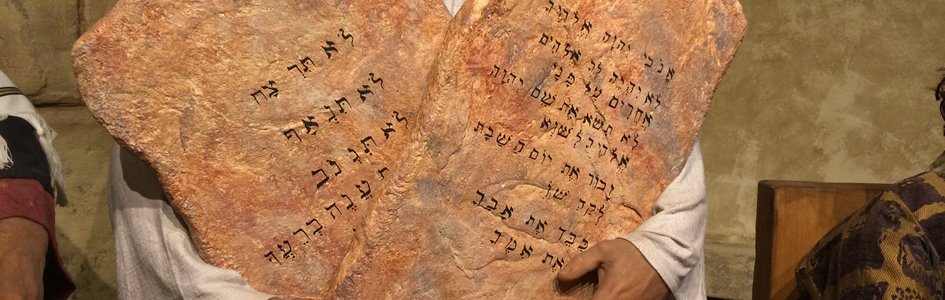
Professor A. Yahuda’s linguistic contribution to Book of Genesis


Did Moses Write Genesis?


by


Damien F. Mackey


Yahuda … was an expert in his field. His profound knowledge of Egyptian and Hebrew combined (not to mention Akkadian) gave him a distinct advantage over fellow Egyptologists unacquainted with Hebrew, who thus could not discern any

appreciable Egyptian influence on the Pentateuch.


Whilst I have previously written on the important linguistic contribution to the Pentateuch as made by professor A. S. Yahuda (“a Palestinian Jew, polymath, teacher, writer, researcher, linguist, and collector of rare documents”: https://en.wikipedia.org/wiki/Abraham_Yahuda  ) - and still continue basically to accept the professor’s findings - I would now be inclined to modify a few of the points that he had made.


For a better appreciation of what follows, one might like to read e.g. my article:


Structure of the Book of Genesis


….

It could be said that the ancient literary methods pointed out by P. J. Wiseman in favour of Mosaïc compilation of Genesis were also around much later than Moses, prevailing even into New Testament times (e.g. Matthew 1:1 gives a toledôt of Jesus Christ in the Gospels), and hence these literary methods could have been inserted into texts composed at the time of, say, the Babylonian Exile (C6th BC, conventional dating), almost a millennium after Moses, to give these texts an air of sacredness or antiquity.


After all, what Wiseman was drawing his information from were Babylonian scribal techniques, not, say, Egyptian ones, which were quite different.


So, why would Moses - let alone the patriarchs who preceded him - necessarily have had any involvement in the Book of Genesis?


Well, this is where the linguistic contribution of professor A. S. Yahuda (Language of the Pentateuch in Its Relation to Egyptian (Oxford UP, 1933) comes in to deal a shock blow to both the documentary theory and to the related Pan-Babylonianism.


Yahuda was, unlike Wiseman, an expert in his field. His profound knowledge of Egyptian and Hebrew combined (not to mention Akkadian) gave him a distinct advantage over fellow Egyptologists unacquainted with Hebrew, who thus could not discern any appreciable Egyptian influence on the Pentateuch. Yahuda however realized that the Pentateuch was absolutely saturated with Egyptian - not only for the periods associated with Egypt, most notably the Joseph narrative including Israel's sojourn in Egypt, but even for the periods associated with, as he thought, Babylonia.

For example, the Flood and the Babel incident.


Comment: This now need to be modified somewhat, however - so I think - in light of my more recent:


Tightening the Geography and Archaeology for Early Genesis


For instance, instead of the Akkadian word for 'Ark' used in the Mesopotamian Flood accounts, or even the Canaanite ones current elsewhere in the Bible, the Noachic account Yahuda noted, uses the Egyptian-based tebah (Egyptian db.t, `box, coffer, chest').


Most important was the linguistic observation by Yahuda:


Whereas those books of Sacred Scripture which were admittedly written during and after the Babylonian Exile reveal in language and style such an unmistakable Babylonian influence that these newly-entered foreign elements leap to the eye, by contrast in the first part of the Book of Genesis, which describes the earlier Babylonian period, the Babylonian influence in the language is so minute as to be almost non-existent. 


Dead Sea Scrolls expert, Fr. Jean Carmignac, had been able to apply the same sort of bilingual expertise - in his case, Greek and Hebrew - to gainsay the received scholarly opinion and show that the New Testament writings in Greek had Hebrew originals: his argument for a much earlier dating than is usual for the New Testament books.

See my article on this:


Fr Jean Carmignac dates Gospels early


While Yahuda's argument is totally Egypto-centric, at least for the Book of Genesis, one does also need to consider the likelihood of 'cultural traffic' from Palestine to Egypt, especially given the prominence of Joseph in Egypt from age 80-110. One might expect that the toledôt documents borne by Israel into Egypt would have become of great interest to the Egyptians under the régime of the Vizier, Joseph (historically Imhotep of Egypt's 3rd dynasty), who had after all saved the nation of Egypt from a 7-year famine, thereby influencing Egyptian thought and concepts.


The combination of Wiseman and Yahuda, in both cases clear-minded studies based on profound analysis of ancient documents, is an absolute bomb waiting to explode all over any artificially constructed literary theory of Genesis.


Whilst I. Kikawada and A. Quinn (Before Abraham Was: The Unity of Genesis 1-11, Abingdon, 1985) have managed to find some merit in the JEDP theory, and I have also suggested how its analytical tools may be useful at least when applied to the apparent multiple sourcing in the Flood narrative (and perhaps in the Esau and Jacob narrative), the system appears as inherently artificial in the light of archaeological discoveries.

U. Cassuto may not have been “diplomatic” (according to Kikawada and Quinn), but nevertheless he was basically correct in his estimation of documentism: "This imposing and beautiful edifice has, in reality, nothing to support it and is founded on air".


It is no coincidence that documentary theory was developed during the era of the German philosopher Immanuel Kant, who proposed an a priori approach to extramental reality, quite different from the common sense approach of the Aristotelian philosophy of being.

The philosophy of science is saturated with this new approach. See e.g.:


Gavin Ardley’s Marvellous Perception of the Nature of the Modern Sciences


Kantianism is well and truly evident, too - as it seems to me - in the Karl Heinrich Graf and Julius Wellhausen attitude to the biblical texts.

And Eduard Meyer carried this over into his study of Egyptian chronology, by devising in his mind a quantifying a priori theory - an entirely artificial one that had no substantial bearing on reality - that he imposed upon his subject with disastrous results.

Again an "imposing and beautiful edifice … founded on air".

See my article:


Berlin Chronologist Dr. Eduard Meyer Doubted Moses. Part Two: Irony of Meyer's Kantianism


Sunday, March 10, 2019

Samson, foxes, Dog Star, Sirius


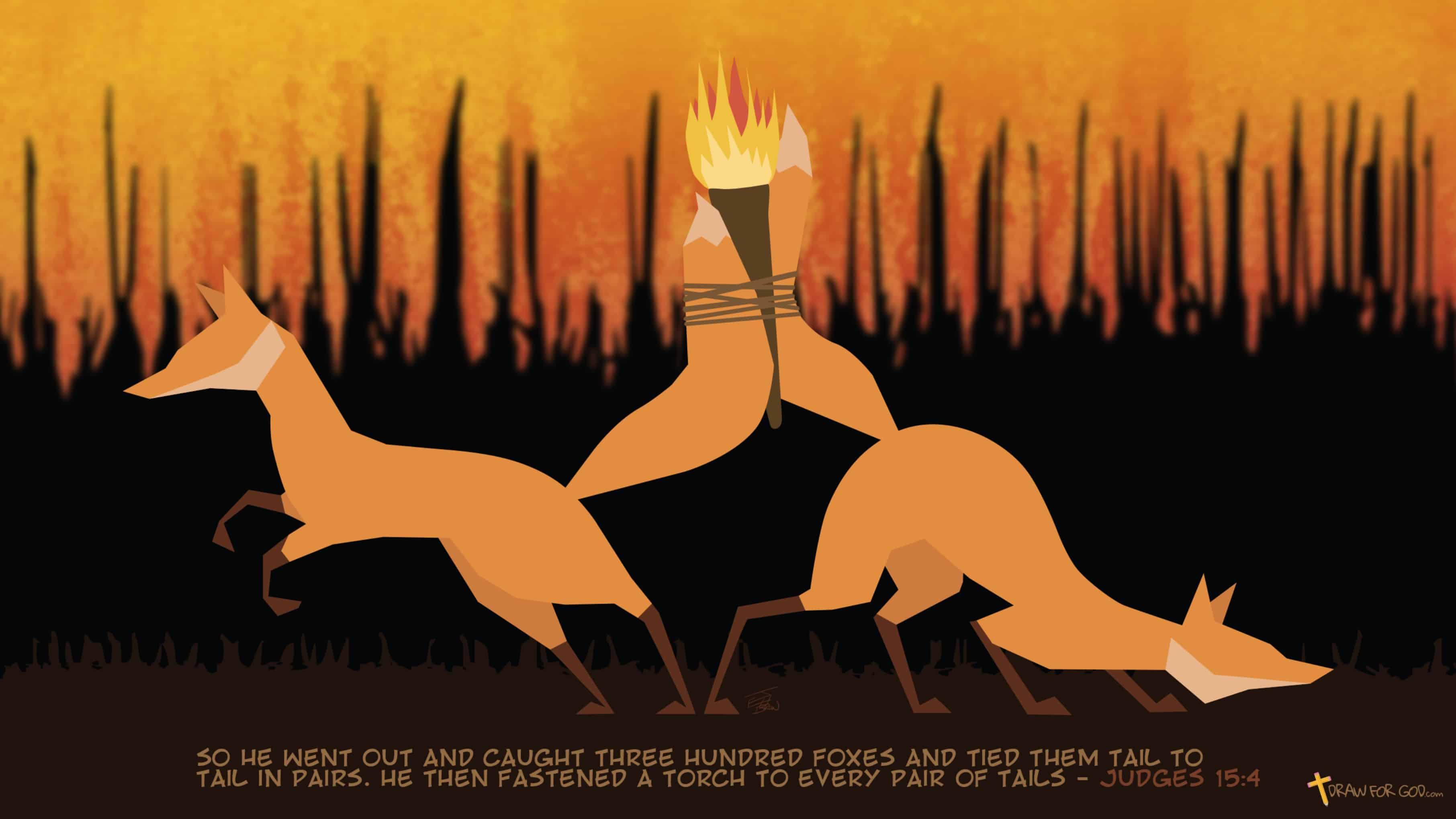
300 Foxes


“It is my feeling that originally, the Samson foxes incident was unconnected to the astral phenomenon. But eventually, as Samson became associated with the sun god and the crop burning wildfire story became more widely known, the heathen nations naturally connected the Hebrew story with the wildfire season and the heliacal rising of the two conspicuous stars”.


John R. Salverda


John R. Salverda writes, once again, on what he perceives to be “A Relationship Between Western Mythology and Hebrew Old Testament”: https://www.ancient-origins.net/myths-legends/dog-days-summer-rising-dog-star-sirius-003431


The Dog Days of Summer​


"Dog Days," the phrase invokes the hottest, most stifling days of summer. The 40 days, beginning July 3 and ending August 11, marks the traditional timing of the Dog Days. These coincide with the heliacal (at sunrise) rising of the Dog Star, Sirius. For the ancient Egyptians, Sirius appeared just before the Nile's flooding season, so they used the star as an indicator of the flood. Since its rising also coincided with a time of extreme heat, the connection with hot, sultry weather was made for all time:


"Dog Days bright and clear
indicate a happy year.
But when accompanied by rain,
for better times our hopes are vain."


Now, you may well ask, what has this common feature of a modern farmer's almanac, got to do with a study of the relationship between Western mythology, and the Hebrew Old Testament? Well, our modern concept of "dog days" can be traced back through the Romans, to the Greeks, and then in my opinion, even beyond that (as I hope to convince the reader) to the story of Samson, that has come down to us in the Old Testament Book of Judges.


Etymologists have no problem tracing the origins of the Idiom "dog days" back to the Romans, the Greeks, and even as far back as the Egyptians. But one important question, that they all seem to have successfully avoided explaining, is this; How did the stars (that are naturally associated with the hot, dry, wildfire season, by virtue of their mere location in the summer sky,) get originally affiliated with dogs (or, even more anciently, with foxes)? First of all let us establish that those days that we moderns have linked to "dogs" may once have been just as strongly (or even more so) connected to "foxes." Among the Greeks the two stars that we commonly associated with dogs (namely Sirius and Canicula) were anciently represented as one dog, and one fox, who were known as "Laelaps the dog" and the "Teumessian fox" as follows (Taken from the Wikipedia article "Laelaps");


Laelaps was a female Greek mythological dog who never failed to catch what she was hunting. … Cephalus, decided to use the hound to hunt the Teumessian fox, a fox that could never be caught. This was a paradox: a dog who always caught his prey and a fox that could never be caught. The chase went on until Zeus, perplexed by their contradictory fates, turned both to stone and cast them into the stars as the constellations Canis Major (Laelaps) and Canis Minor (the Teumessian fox). (See: Apollodorus, "Bibliotheca" 3,192. and; "Nature Guide Stars and Planets." p. 275. DK Publishing 2012. Penguin. ISBN 978-1-4654-0353-7).


In the story of Samson there were pairs of foxes tied together at their tails, with a blazing fire between them. They were presumably running back and forth trying to get away from the flame, in a perverse, back to back, tug of war (running after, following but not really chasing each other.).


It is perhaps understandable how the Greeks could've come up with the idea of the unresolved chase of Laelaps (forever pursuing) and the Teumessian fox (never overtaken) as a corruption of the original tale, told about Samson and his pairs of foxes, in the Book of Judges (in their frantic end to end chase). It is however, noteworthy to point out that the foxes are portrayed as being in pairs, because the dog stars are indeed portrayed as a pair of stars (During the wildfire season, the blazing sun appears between them.). The next logical step in identifying the "dog stars" with Samson's well known firefoxes (with a knowing wink and a nod to users of the very popular web browser), comes with showing that there was an ancient Greek association, of the "Teumessian fox," with crop burning wildfires. The Greeks did connect the "dog stars" (at least one of which, which we have pointed out, was a fox and not a dog) with wildfires, I shall here produce a few ancient Greek sources to prove it. First of all, this association was made evident by the Greek myth of "Aristaeus."


The chapter of the Aristaeus myth that deals with the field scorching "dog-star" takes place on one of the Minoan Islands, specifically Keos (sometimes spelled "Ceos"). This story is like that of Samson and the foxes, in that the "scorched ... land of the Ceans" that had "robbed their fields of produce" had been caused by "Procyon" a star that the Greeks identified with the Teumessian Fox, related by Higinus as follows; "Jupiter, pitying their misfortune, represented their forms among the stars ... The dog, however, from its own name and likeness, they have called Canicula. It is called Procyon by the Greeks, because it rises before the greater Dog. ... Canicula rising with its heat, scorched the land of the Ceans, and robbed their fields of produce ... Their king, Aristaeus, son of Apollo and Cyrene, and father of Actaeon, asked his father by what means he could free the state from affliction. The god bade them expiate the death of Icarus with many victims, and asked from Jove that when Canicula rises he should send wind for forty days to temper the heat of Canicula." (Hyginus, Astronomica 2. 4). It is noteworthy that Hyginus, while using the Latin term "Canicula" (the "lesser dog") points out that "It is called Procyon by the Greeks, because it rises before the greater Dog" ("Procyon" meaning "before the dog" does not necessarily indicate that the Greeks themselves thought of it as a dog but, that it merely preceded the dog, or that it ran ahead of the dog, as it was known in their mythology as the "Teumessian Fox."). We nowadays call it Canis Minor, however in Akkadian and Sumerian it is "Shelebu" and "KA.A" (both meaning "the Fox"). It was well known in ancient times that the appearance of these "dog-stars" in conjunction with the sun meant severe drought and wildfires.


Although burning fields were clearly associated with the fox, the Pelasgian hero Aristaeus is characteristically credited with doing just the opposite of what the Danite hero Samson did (The Pelasgian/Philistines had apparently mitigated their version of the Scriptural Samson, their antagonistic enemy, into "Aristaeus" their own protagonist hero. An article that explores the probability that Aristaeus was an ancient Pelasgian/Philistine version of the Hebrew Samson can be read; Here.). Aristaeus alleviated the scorching, while Samson was said to have caused it.


As Apollonius relates; "Sirius was scorching the Minoan Islands from the sky, and the people could find no permanent cure for the trouble till Hekatos (Apollo) put it in their heads to send for Aristaeus. So, as his father’s command, Aristaeus ... made ritual offerings in the hills to the Dog-star and to Zeus Kronides himself. In response, Zeus gave his orders--and the Etesiai refresh the earth for forty days." (Apollonius Rhodius, "Argonautica" 2. 518 ff.). The number "40," used as a time period, is a well known Hebrew convention, widely attested to in Scriptural usage. It has translated into Christian applications in such traditions as "Lent" and "St. Swithins day" (July 15 is St. Swithin’s Day. There is a very old Scottish weather proverb; St. Swithin’s Day if thou dost rain, For forty days it will remain.). This, it seems to me, is highly suggestive as to the Hebrew origins of even some "pagan" customs like the "six weeks" of groundhog day, and the subject of the present article the dog days of summer where, as we can see here from Apollonius, it's roots go back into the dim antiquity of Greek mythology.


See how Nonnus tells the tale, weaving Aristaeus' beekeeping (another Samson connection from Judges 14:8) attribute into the narrative; "He (Aristaeus) lulled asleep the scorching dogstar of Maira. He kindled the fragrant altar of Zeus Ikmaios (of the Moisture); he poured the bull's blood over the sweet libation, and the curious gifts of the gadabout bee which he lay on the altar, filling his dainty cups with a posset mixt with honey. Father Zeus heard him; and honouring his son's son, he sent a counterblast of pest-averting winds to restrain Sirius with his fiery fevers." (Nonnus, "Dionysiaca" 5. 212 ff.).


It is my feeling that originally, the Samson foxes incident was unconnected to the astral phenomenon. But eventually, as Samson became associated with the sun god and the crop burning wildfire story became more widely known, the heathen nations naturally connected the Hebrew story with the wildfire season and the heliacal rising of the two conspicuous stars. It seems evident to me that these stars became identified with the fox originally because of the anciently well known story of the Danite hero. It is also apparent that Samson was anciently promoted as a "Messiah" figure and, was widely popular, giving rise to such "mythological" characters as, not only Arisaeus but also Herakles, and perhaps even lended his attributes to fill out the stories "pagan" sun-kings such as Oedipus as well. Connecting the "King of kings" with the sun god (just as the "crown" has a clear association with the "corona") should come as a shock to nobody. (The heathen equation of the King as the Sun, or as the son of the Sun, as in ancient Egypt, surely had it's origins with the idea that the longed for Messiah, was the son of God and/or God Himself. And if you worshipped God as the Sun, then the link between the Messiah, as the great King, and the Sun, follows naturally.). Equating God and/or the Messiah with the Sun was a widely attested to ancient misconception that the Scriptural narrative spends no little effort in attempting to correct. Thus the blazing fire between Samson's foxes became analogous to the Sun rising between the "dog" stars during the height of the wildfire season.


The burning fields in the story of Samson ("Shemesh-on" the name Samson is the word shemesh meaning "sun" suffixed with the "-on" extension. This extension personifies or localizes the root: the name "Sams-on" means "Sun Man.") and the foxes (the dog stars) almost certainly has something to do with this phenomenon (The stars attending the wildfire season may have reminded astronomers of the, presumably renowned, field burning foxes in the Hebrew story.). See how Aratus associates the "star" with tree burning "flame" as he says; "A star that keenest of all blazes with a searing flame and him men call Sirius. When he rises with Helios, no longer do the trees deceive him by the feeble freshness of their leaves." (Aratus, Phaenomena 328 ff.). And here from Quintus Smyrnaeus; "From the ocean-verge up springs Helios in glory, flashing fire far over earth - fire, when beside his radiant chariot-team races the red star Sirius" (Quintus Smyrnaeus, "Fall of Troy" 8. 30 ff.). And also Statius; "Sirius the Dog-star smitten by Hyperion’s full might pitilessly burns the panting fields." (Statius, "Silvae" 3.1.5). In the story of Oedipus as told by Seneca, Thebes was plagued by a drought; "No soft breeze with its cool breath relieves our breasts that pant with heat, no gentle Zephyrus blows; but Titan (the sun) augments the scorching dog-stars' fires, close-pressing upon the Nemean Lion’s back. Water has fled the streams, and from the herbage verdure. Dirce is dry, scant flows Ismenus’ stream" (Seneca, Oedipus 37 ff.). Take note how Seneca incorporates the "Nemean Lion" (the constellation Leo) into the portent of the "scorching fires," for consideration along with the other lion slaying, fox subduing myths.


Another suspicious conflation between the Samson, Herakles, and Oedipus, stories is the way that the mythographers keep trying to work foxes into their tales. Corinna ties Oedipus to the crop burning fox; "Oedipus killed not only the Sphinx but also the Teumessian fox." (Corinna, Fragment 672. Greek Lyric IV). Thus the fox is linked to the death of the maiden/lion Sphinx of Oedipus; Also Apollodorus gives to Amphitryon, the foster-father of Herakles, the same role; ''Amphitryon would free the Cadmean Land of its Fox. For a wild Fox was creating havoc in the land." (Apollodorus, Bibliotheca 2. 57) This is the same "Teumessian fox" or "Cadmean vixen" that is associated with both Oedipus and the father of Herakles. In the Herakles saga, the fox theme helps to explain the connection between the family of Herakles and the city of Thebes, where the strong-man would kill his first lion and meet (and kill) his first bride.


Samson of course, killed a lion and was responsible for the death of his maiden, also in conjunction with his fox episode; "And Samson went and caught three hundred foxes, and took firebrands, and turned tail to tail, and put a firebrand in the midst between two tails. And when he had set the brands on fire, he let them go into the standing corn of the Philistines, and burnt up both the shocks, and also the standing corn, with the vineyards and olives. Then the Philistines said, Who hath done this? And they answered, Samson, the son in law of the Timnite, because he had taken his wife, and given her to his companion. And the Philistines came up, and burnt her and her father with fire." (Judges 15:4-6); "he caught three hundred foxes, and joining lighted torches to their tails, he sent them into the fields of the Philistines, by which means the fruits of the fields perished." (Josephus "Antiquities of the Jews" Book 5 Chapter 8, 7). Heracles set fire to the city of Orchomenus the capital city of the Minyans; "Then appearing unawares before the city of the Orchomenians and slipping in at their gates he both burned the palace of the Minyans and razed the city to the ground." (Diodorus Siculus, “Library of History” Book 4, Chap. 10, 5).
Aristaeus was, however indirectly, associated with this particular "Teumessian fox" as well. Actually, the fox motifs that are attributed to Aristaeus, are much more like that of Samson's, than are those of either Herakles', or Oedipus'. For the fox myth that is connected with Aristaeus involves the burning up of the crop fields and orchard trees.


The Romans also associated foxes with the burning of crops through wildfires (although not necessarily during the mid summer season). As is evidenced by one of Ovid's accounts. I shall close with something that was written way back in the early 1800's by the famous Biblical commentator Adam Clarke, who had a very perceptive opinion on Ovid's concerning this ancient "Roman" tradition thusly (I added the parenthetical remarks):


Adam Clarke's Commentary on the OT, Volume 2. "The Book of Judges" Notes on Chap. XV, Verse 20


The burning of the Philistines' corn by the means of foxes and firebrands is a very remarkable circumstance; and there is a story told by Ovid, in the 4th book of his Fasti, that bears a striking similitude to this; and is supposed by some learned men (Namely, Samuel Bochart and Petrus Serrarius -JRS) to allude to Samson and his foxes. The poet is at a loss to account for this custom, but brings in an old man of Carseoli, with what must have appeared to himself a very unsatisfactory solution. The passage begins as follows:


The substance of the whole account, which is too long to be transcribed, is this: It was a custom in Rome, celebrated in the month of April to let loose a number of foxes in the circus, with lighted flambeaux on their backs; and the Roman people took pleasure in seeing these animals run about till roasted to death by the flames with which they were enveloped. The poet wishes to know what the origin of this custom was, and is thus informed by an old man of the city of Carseoli: "A frolicsome young lad, about ten years of age, found, near a thicket, a fox that had stolen away many fowls from the neighboring roosts. Having enveloped his body with hay and straw, he set it on fire, and let the fox loose. The animal, in order to avoid the flames, took to the standing corn which was then ready for the sickle; and the wind, driving the flames with double violence, the crops were everywhere consumed. Though this transaction is long since gone by, the commemoration of it still remains; for, by a law of this city, every fox that is taken is burnt to death. Thus the nation awards to the foxes the punishment of being burnt alive, for the destruction of the ripe corn formerly occasioned by one of these animals."


Both Serrarius (Petrus Serrarius, who was a Dutch millenarian theologian. 1600–1669 -JRS) and Bochart (Samuel Bochart, who was a French Protestant biblical scholar. 1599 –1667 -JRS) reject this origin of the custom given by Ovid; and insist that the custom took its rise from the burning of the Philistines' corn by Samson's foxes. The origin ascribed to the custom by the Carseolian they consider as too frivolous and unimportant to be commemorated by a national festival. The time of the observation does not accord with the time of harvest about Rome and in Italy, but it perfectly accords with the time of harvest in Palestine, which was at least as early as April.


Nor does the circumstance of the fox wrapped in hay and let loose, the hay being set on fire, bear any proper resemblance to the foxes let loose in the circus with burning brands on their backs. These learned men therefore conclude that it is much more natural to suppose that the Romans derived the custom from Judea, where probably the burning of the Philistines' corn might, for some time, have been annually commemorated. The whole account is certainly very singular, and has not a very satisfactory solution in the old man's tale, as related by the Roman poet. All public institutions have had their origin in facts; and if, through the lapse of time or loss of records, the original facts be lost, we may legitimately look for them in cases where there is so near a resemblance as in that above.