....
SOTHIC DATING
But what about the "proof" that comes from Sothic dating? As we saw above, testimony from 12th and 18th dynasty establish dates of about 1870 and 1540 BC respectively. How reliable is this?
James explains the Sothic dating by citing from I. E. S. Edwards:
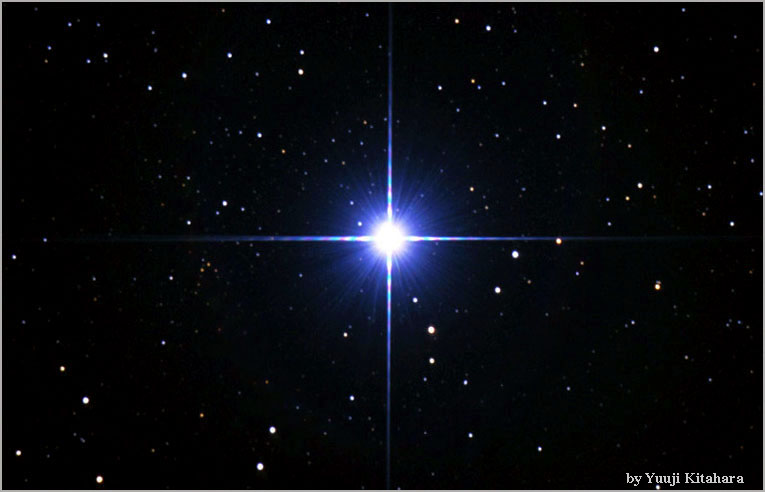
"The 12 months were divided into 3 seasons bearing names which are generally rendered Inundation, Winter, and Summer, each season consisting of four months. The year began in the season of Inundation, and in the ideal year the first day of the first month of the season of Inundation coincided with the first day on which the dog-star Sirius [Sothis] should be seen on the eastern horizon just before the rising of the sun (i.e., roughly about 19 or 20 July in the Julian calendar). Since the dynastic Egyptians never introduced a leap year into their civil calendar, New Year's Day advanced by one whole day in relation to the nature year in every period of four years. As a result of this displacement New Year's Day and the day on which Sirius role heliacally actually coincided for no more than four [consecutive] years in every period of approximately 1460 years (i.e., 365 x 4), the so-called Sothic cycle.
"Thus," continues James, "according to the theory, the heliacal rising of Sirius (Sothis), together with the seasons, gradually revolved around the civil calendar. After 730 years they would have completely reversed with respect to the solar year, returning to their original position only after a period of some 1460 years:
"Dates in Egyptian records were generally set out according to a fixed formula: ... If in addition to this formula, a document tells us that Sirius rose heliacally on that day it is only necessary to count the number of days which had elapsed since the first day of the year given in the formula and multiply the total by four to obtain the number of years since the beginning of the particular Sothic cycle."
Now the fact is that we only have two such Sothic dates, and one of them is no good. The first is provided by papyrus fragments "found at el-Lahun, dated to year 7 of an unnamed pharaoh, but reasonably attributed to Senusret III on paleographic grounds. This document does not give the beginning of a Sothic cycle, but a calendar date for the rising of Sirius, which can be retrocalculated as 1872 BC if the sighting of Sirius was made in the Memphis-Lahun region. If, however, the sighting was made at the lower latitude of Elephantine, as Rolf Krauss has recently advocated, the date would be reduced to 1830 BC."
The only other Sothic date comes from the Ebers Papyrus for year 9 of Amenhotep I. There is a problem with this one, though, since while the "emergence of Sothis" is referred to in the text, no calendar day is specified. Thus, no calculation of a New Year's Day starting point can be made, and this Sothic date is of no use.
So we have one date: year 7 of (probably) Senusret III, from which we can calculate back to either 1872 or 1830 BC, and then forward again to the BC date of Senusret III year 7. But how reliable is even this?
James points out that "there are good reasons for rejecting the whole concept of Sothic dating as it was applied by the earlier Egyptologists, simply on the grounds that it did not make allowance for any calendrical adjustments. It is assumed that the Egyptians allowed the civil calendar and the seasonal cycle, to which the lunar-religious calendar was tied, to progress further and further out of alignment." There is no evidence to support this. In fact, we know from "the much better documented (calendrically speaking) Hellenistic and Roman periods [of Egyptian history] that several major reforms were put into effect within the space of only three centuries." If the Egyptians were willing to revise the calendar during this period, who is to say that they did not revise it at other periods as well?
James puts the conclusion in italics: "If a single calendrical adjustment was made in the period before the Ptolemies, it would completely invalidate the Sothic calculations for any prior period."
....
Taken from: http://reformed-theology.org/ice/newslet/bc/bc.98.10.htm