Powered By Blogger

Wednesday, September 19, 2018

A Revised History of the Era of King Hezekiah


Image result for king hezekiah


by

 Damien F. Mackey


Part One:

A conventional overview of this period


My intention in this series will be to contrast the conventional king-lists for Judah; Egypt-Ethiopia; and Assyro-Babylonia for this period (c. 716 – c. 596 BC) with my recently revised version of it which will lop off almost half a century from this approximately 120–year span. 


{The following dates are all conventional, and approximate only, BC dates}


Later Kings of Judah


Hezekiah                                 716-687

Manasseh                                687-643

Amon                                       643-641

Josiah                                      641-609

[Jehoahaz]

Jehoiakim                                608-596

Jehoiachin (Jeconiah)             596


Later Pharaohs of Egypt-Ethiopia


                                    Piye                                         744-714

                                    Shebitku                                   714-705

                                    Shabaka                                  705-690

                                    Taharqa (Tirhakah)                690-664           Necho I            672-664

                                    Tantamani                               664-653           Psamtik I         664-610                                                                                                           Necho II          610-595

                                                                                                            Psamtik II        595-


Neo-Assyrian-Babylonian Kings


                                    Sargon II                                 722-705

                                    Sennacherib                            705-681

                                    Esarhaddon                             681-669

                                    Ashurbanipal                           669-627

                                    Ashur-etil-ilani                        631-627

                                    Sin-shumu-lishir                      626

                                    Sin-shar-ishkun                       627-612


                                    Nabopolassar                          626-605

                                    Nebuchednezzar II                  605-562

                                    ….


Part Two (i): Sorting out later kings of Judah


Looking at the conventional version of the:


Later Kings of Judah


Hezekiah                                 716-687

Manasseh                                687-643

Amon                                      643-641

Josiah                                      641-609

[Jehoahaz]

Jehoiakim                                608-596

Jehoiachin (Jeconiah)              596


I can see some serious problems here, but also, now, I perceive the need to re-organise various things.


Hezekiah


With the Fall of Samaria conventionally dated to c. 722/21 BC, then the favoured date these days for the beginning of the reign of King Hezekiah of Judah, c. 716 BC, is blatantly contrary to the flat statement of the OT (e.g. 2 Kings 18:10): “Three years later, during the sixth year of King Hezekiah's reign and the ninth year of King Hoshea's reign in Israel, Samaria fell”. The Bible here assists us with a 3-way synchronism (Hezekiah; Hoshea; and Fall of Samaria) which scholars, though, choose completely to brush aside, they preferring to follow the confusing and erroneous (neo-Assyrian-based) chronology of Edwin R. Thiele, in The Mysterious Numbers of the Hebrew Kings.


If the Fall of Samaria is to be dated c. 722 BC (a conventional date which will end up in the long run being hopelessly inaccurate – but which can serve as a ‘sighter’ for the time being), then King Hezekiah’s regnal beginning has to be set at c. 729/8 BC, and not at 716 BC.


More will be said on King Hezekiah later, as we find an important regal alter ego for him.


Manasseh


Although Manasseh would indeed continue on for 55 years, it now needs to be understood (and this is certainly radical) that more than forty of those years were spent in Babylonian (and probably also Susan) captivity.

This situation serves to explain why the prophet Jeremiah could point the finger at (the conventionally well dead) Manasseh as the cause of the Jewish deportations (Jeremiah 15:4): “And I will cause them to be removed into all kingdoms of the earth, because of Manasseh the son of Hezekiah king of Judah, for that which he did in Jerusalem”.


More will be said on Manasseh later, as we find a regal alter ego for him.


Amon


How could this young king of only two years of reign in Jerusalem have gone down in biblical history as being even worse than his long-reigning father, Manasseh?

Thus 2 Chronicles 33:21-23:


Amon was twenty-two years old when he became king, and he reigned in Jerusalem two years. He did evil in the eyes of the Lord, as his father Manasseh had done. Amon worshiped and offered sacrifices to all the idols Manasseh had made. But unlike his father Manasseh, he did not humble himself before the Lord; Amon increased his guilt.


Once again the explanation lies in the facts that (i) the king continued on for a very long time in captivity, and (ii) he acquired a very nasty alter ego.

For a full account of all of this, see my article:


King Amon's descent into Aman (Haman)


‘Alter egos’ now come into play


While I accept this standard sequence of Judaean kings so far, Hezekiah, father of Manasseh, father of Amon, I now believe that the remaining kings, Josiah, Jehoiakim and Jehoiachin, are simply duplicates of the first trio, so that:


Hezekiah = Josiah;

Manasseh = Jehoiakim;

Amon = Jehoiachin.


Sorting out some complications


There are complications, though, as I have discussed before, insofar as various biblical texts, including Matthew’s ‘Genealogy of Jesus the Messiah’, give Amon as the father of Josiah (Matthew 1:10), plus the fact that different names are given for the mothers of kings who I am arguing are duplicates.

Some versions of Matthew 1:10, however, give “Amos” as the father of Josiah, and Amos is a name very different from the apparently Egyptian name, Amon - probably given to Jehoiachin by his Egypt-leaning father, Jehoiakim, or by the pharaoh:


Jehoiakim, who was 25 when he ascended the throne (according to I Chron. 3:15 he was the second son of Josiah), was most likely selected because of his known support of a pro-Egyptian policy. Jehoiakim's original name Eliakim was changed by the Pharaoh in order to indicate the Judahite king's subservience to Egypt (II Kings 23:34; II Chron. 36:4). Egypt also imposed a heavy tax on Judah – 100 talents of silver and a talent of gold – which Jehoiakim exacted by levying a tax upon all people of the land (II Kings 23:33, 35).


Father’s names


I would now re-identify this “Amos” with Ahaz - whether this was another name for Ahaz, or simply a scribal error, perhaps a confusion with Amon - thus refining my above list to:


Ahaz = Amos;

Hezekiah = Josiah;

Manasseh = Jehoiakim;

Amon = Jehoiachin.


The fact that the various kings of Judah at this time had more than the one name (e.g., Jehoiakim was formerly Eliakim, 2 Kings 23:34; Zedekiah was formerly Mattaniah, 2 Kings 24:17) assists me somewhat in my case for alter egos.


Mothers’ names


The differing names of the women (mothers) can be accounted for, at least to some extent, by the fact that sometimes a woman was named “mother” who was not the biological mother. King Amon was, for instance, in his guise as the evil Haman (see above article on “Haman”) the “son of Hammedatha” (Esther 3:1); Hammedatha, a woman, being the mother of Amon’s (i.e., Jehoiachin’s) uncles (Jehoahaz and Zedekiah), as (queen) Ham[m]utal (cf. 2 Kings 23:31 and 24:18).

In the case of my Manasseh = Jehoiakim identification, Manasseh’s mother (2 Kings 21:1), Hephzibah, could perhaps be the same person as king Jehoiakim’s mother (2 Kings 23:36): “[Jehoiakim’s] mother’s name was Zebidah daughter of Pedaiah; she was from Rumah”.

Heph-zibah = Zebi-dah?


According to 2 Kings 18:2: “[Hezekiah’s] mother’s name was Abijah [or Abi], daughter of Zechariah”, whilst (his alter ego) “[Josiah’s] mother’s name was Jedidah daughter of Adaiah; she was from Bozkath”.

The latter, I find, bears some resemblance to Jehoiakim’s [= Manasseh’s] mother, “Zebidah daughter of Pedaiah” – compare with “Jedidah daughter of Adaiah”.

The location of Rumah (for Jehoiakim’s mother) “is disputed” (Nadav Na’aman, Ancient Israel and Its Neighbors: Interaction and Counteraction, p. 355).


Previously we found that certain complications inevitably arise from my re-casting of the later kings of Judah as follows:


Ahaz = Amos;

Hezekiah = Josiah;

Manasseh = Jehoiakim;

Amon = Jehoiachin.


But I was also gratified to find that, with regard to my dependence upon alter egos for my reconstruction, some of the kings of Judah at the time were biblically known to have had more than the one name.

We also found that, whilst mother’s names may appear to be inconsistent with my revision, at least one of those designated as a “mother” of a particular king was not in fact his biological mother, but was the mother of that king’s uncles.


The complications that arise from my revision do become more severe, though, for this next category:


Regnal years, ages at accession


In the case of Amon = Jehoiachin, the differences in regnal years and ages at commencement of reign can fairly easily be accounted for by co-regency, as I have already suggested.

And, whilst the 55-years of reign attributed to Manasseh (2 Kings 21:1) far outnumber the eleven years attributed to (my alter ego for him) Jehoiakim (2 Kings 23:36), the count of Manasseh’s years continued on, as I have suggested, into his long captivity in Babylon.

In the same way, Jehoiachin’s reign of only “three months” in Jerusalem (2 Kings 24:8), will be extended to his “thirty-seventh year” in captivity in 2 Kings 25:27.


However, there is a big discrepancy, much harder to account for, in the case of my:


Hezekiah = Josiah.


“[Hezekiah] was twenty-five years old when he became king, and he reigned in Jerusalem twenty-nine years” (2 King 18:2).

Josiah was eight years old when he became king, and he reigned in Jerusalem thirty-one years (2 Kings 22:1)”.


At this stage, I do not have a satisfactory solution to this very large discrepancy in age at accession (25 years versus 8 years).

Added to this is the fact that Sirach praises Hezekiah (48:17-22) and Josiah (49:1-3) as if referring to two separate kings, concluding with (49:4): “Except for David and Hezekiah and Josiah, all of them were great sinners, for they abandoned the law of the Most High; the kings of Judah came to an end”.


Places of burial


Francesca Stavrakopoulou provides a useful comment on the burials of the kings in question in this article, “Exploring the Garden of Uzza: Death, Burial and Ideologies of Kingship”: https://www.jstor.org/stable/pdf/42614642.pdf


As is well known, almost every Judahite monarch up to and including Ahaz is said to have been buried "with his ancestors in the City of David" (2), whilst the burial notices for Ahaz's successors are either inconsistent or non-existent: Manasseh is buried "in the garden of his house in the Garden of Uzza" (2 Kgs 21,18); Amon's body is interred "in his tomb in the Garden of Uzza" (21 ,26); Josiah is buried "in his tomb" (23,30); the resting places of Hezekiah and Jehoiakim go unmentioned though their deaths are acknowledged (20,21; 24,6); Jehoahaz is said to die whilst in Egyptian captivity (23,34); and neither the deaths nor the burials of Jehoiachin and Zedekiah are noted. Given the important theological and narrative functions of the death and burial notices in emphasizing the continuity of the Davidic dynasty (3), these variations have proved problematic for many commentators. ….


Interestingly, here, the two kings of Judah who went into long captivity, Manasseh and Amon, were buried in the same place, in their palace garden (“the Garden of Uzza”).

Considering that Amon, as Haman, was killed in his palace, in Susa, then this unknown “Garden” must have been situated in Susa.

And that would explain why neither Manasseh, nor Amon, was buried - like their ancestors were - “in the City of David”.

‘The death and burial of king Jehoiachin is not noted’ because these details have been noted in two other instances, in the cases of Jehoiachin’s alter egos, (i) Amon:


(2 Kings 21:23-24): “Amon’s officials conspired against him and assassinated the king in his palace. Then the people of the land killed all who had plotted against King Amon, and they made Josiah his son king in his place”.


and (ii) Haman:


(Esther 7:9-10): “Then Harbona, one of the eunuchs attending the king, said, ‘A pole reaching to a height of fifty cubits stands by Haman’s house [palace]. He had it set up for Mordecai, who spoke up to help the king’. The king said, ‘Impale him on it!’ So they impaled Haman on the pole he had set up for Mordecai. Then the king’s fury subsided”.


“The people of the land” who then avenged Amon would have been the people of the land of Susa, some of whom would eventually swing over to the side of the Jews:


The Book of Esther tells that many of the peoples of the land became Jews or passed themselves off as Jews. While the obvious motive for this behavior was fear of the new Jewish power, the result was that people now saw Jews as a religious community that all could join, not just a tribe living in a certain land.


Part Two (ii):

Benefits from sorting out later kings of Judah


What are some of these benefits?


For one, with several of the later kings of Judah now identified as duplicates, namely:


Ahaz = Amos;

Hezekiah = Josiah;

Manasseh = Jehoiakim;

Amon = Jehoiachin,


then certain kings of Judah inexplicably omitted from Matthew’s Genealogy can be re-instated. I refer to kings Joash (Jehoash) and Amaziah, and possibly even their predecessor Ahaziah.

And, does king Jehoiachin (= Amon = Haman) need to figure anymore in Matthew’s Genealogy, considering that he and his sons were all slain?

This latter situation may also be the key to Daniel 9:26: “… an anointed one will be put to death and will have nothing”.


Secondly, with Hezekiah now expanded to include Josiah, this would fill out an important king of Judah who almost seems to disappear from the scene after only his 14th year.

That Hezekiah, Josiah, shared the same officials is apparent from this:

Chart 37

Comparison of Hezekiah and Josiah Narratives


which I accept in general – though not in every detail.

Hezekiah’s merging with Josiah would solve problems like this legitimate one:


About Hezekiah, we read in 2 Kings 18:5-6:

Hezekiah trusted in the LORD, the God of Israel. There was no one like him among all the kings of Judah, either before him or after him. He held fast to the LORD and did not cease to follow him; he kept the commands the LORD had given Moses.


But then about Josiah a couple chapters later in 2 Kings 23:25:

Neither before nor after Josiah was there a king like him who turned to the LORD as he did—with all his heart and with all his soul and with all his strength, in accordance with all the Law of Moses.


How can the reigns of Hezekiah and Josiah both be the greatest, especially when it is said of both that neither before nor after him was there a king like him? Is this a contradiction?

[End of quotes]


Thirdly, with the eras of Hezekiah, of Josiah, now crunched together, the respective great prophets, Isaiah, and Jeremiah, would become contemporaneous.

This enables for Isaiah’s “Suffering Servant”, so reminiscent of the prophet Jeremiah (but culminating perfectly in Jesus Christ), to be Jeremiah, now personally known to Isaiah (Jeremiah’s older contemporary).   


Fourthly, the traditionally well attested ‘Martyrdom of Isaiah’ at the hands of king Manasseh - unknown, however, from the biblical record of Manasseh, qua Manasseh - can be found in the martyrdom of the prophet Uriah (Urijah) at the hands of Manasseh’s alter ego, king Jehoiakim (Jeremiah 26:23).


Fifthly, Manasseh’s identification with Jehoiakim would explain why Jeremiah could attribute to Manasseh - instead of Jehoiakim - the guilt for the deportations of the Jews (Jeremiah 15:4).


Sixthly, we can now count the regnal years of Manasseh through the eleven years of Jehoiakim (the latter’s 4th corresponding with the 1st of king Nebuchednezzar, Jeremiah 25:1), through Nebuchednezzar’s 43rd (= Manasseh’s 46th); 3-4 of Evil-Merodach (= Manasseh’s 50th); and on for approximately another 5 years into the Medo-Persian era. This means that:


Seventhly, Manasseh can now likely be identified with the “Sheshbazzar the prince of Judah” (Ezra 1:8), who returns briefly to restore to Jerusalem the treasures stolen by the Babylonians, but who dies a few years later and is buried in the “Garden of Uzza”, in Susa (as I have estimated), where the executed king Amon (Haman) will later be buried.


Part Three:

Merging pharaoh Necho I and pharaoh Necho II


If king Hezekiah of Judah is to be identified with king Josiah, as according to this series, then it becomes inevitable that there can be only one pharaoh Necho, and that Necho so-called II, who killed Josiah, must be the same as Necho I of the approximate era of king Hezekiah.


Art historians find it hard to determine whether a pharaonic statue represents Necho I or II. Moreover, Necho I is poorly known – as is apparent from the following:


This sculpture [see next page] probably belonged to a group showing the king presenting an offering to a god. The inscription indicates that the royal figure was King Necho. Two [sic] Saite rulers had this name, the little-known Necho I and the more celebrated Necho II in whose reign the Egyptians circumnavigated Africa and attempted to link the Mediterranean and Red seas with a canal. Which Necho is represented is not known.  


Again, we do not know at least the Horus Name, Nebty Name, or Golden Horus Name, of pharaoh Necho I: http://www.phouka.com/pharaoh/pharaoh/dynasties/dyn26/01nekau1.html

 <em>Kneeling Statuette of King Necho</em>, ca. 610-595 B.C.E. Bronze, 5 1/2 x 2 1/4 x 2 3/4in. (14 x 5.7 x 7cm). Brooklyn Museum, Charles Edwin Wilbour Fund, 71.11. Creative Commons-BY (Photo: Brooklyn Museum, 71.11_threequarter_PS1.jpg)


It becomes inevitable now, also, that Psamtik (Psammetichus) I, son of Necho I, be identified with Psamtik (Psammetichus) II, son of Necho II.


Part Four:

Merging neo-Assyrians and neo-Babylonians


If pharaoh Necho I is to be identified with pharaoh Necho II, as according to this series, then it becomes inevitable now that Necho I’s Mesopotamian contemporaries, Esarhaddon and Ashurbanipal, must be the same as Necho II’s Mesopotamian contemporaries, respectively Nabopolassar and Nebuchednezzar II.


For more on this, see e.g. my article:


Ashurbanipal the Great


Friday, August 10, 2018

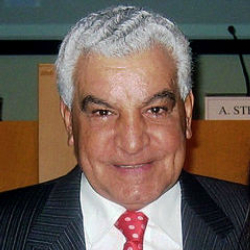
Evans-like dictatorial tyrant Zahi Hawass


Author Zahi Hawass

Zahi Hawass

Good heavens, Sir Arthur Evans!

Part Five:
Evans-like dictatorial tyrant Zahi Hawass


With an army of adoring international fans and close personal connections to Mubarak, the charges of having a poor scientific approach to archaeological work
and being too concerned with endless self- promotion had little impact – Hawass was perceived as virtually unassailable.”.

Emma Watts-Plumpkin


It’s quite a killer to healthy research when establishment tyrants such as Arthur Evans and Zahi Hawass become firmly set in place.

Emma Watts-Plumpkin writes of “Cairo: Egyptology in crisis (September 5, 2011):
After the dramatic departure of President Hosni Mubarak, attention swiftly turned to one of his high-profile ministers, the world- famous archaeologist Dr Zahi Hawass. No stranger to the glare of the media spotlight, Hawass quickly became tainted along with the crumbling regime and was engulfed by damaging charges of corruption and mismanagement. On Sunday 17 July, Hawass was abruptly sacked as the Minister of State for Antiquities Affairs in an overhaul of the country’s cabinet, and his controversial reign as one of the most powerful men in the archaeological world finally came to an end.
Hawass rose to prominence in the late 1980s as the General Director of Antiquities for the Giza Pyramids and became familiar to worldwide television audiences through documentaries investigating the mysteries of the pyramids. Infamous for his trademark hat and self-styling as the ‘Indiana Jones of Egypt’, Western-educated Hawass was elevated to the position of Secretary General of the Supreme Council of Antiquities (SCA) on 1 January 2002. As Egypt’s foremost archaeologist, he was responsible for a staff of 30,000, control of all ongoing archaeological work, and the maintenance of a vast array of cultural riches including the Pyramids at Giza, the Valley of the Kings, and the Temple of Karnak in modern-day Luxor.
Formidable in asserting his new position, Hawass unveiled a raft of new measures. These included an aggressive nationwide museum-building programme, promising to improve the working conditions for local archaeologists, and implementing new site-management policies. Egyptologist Dr Melinda Hartwig of Georgia State University observes that Hawass was ‘adamant about publishing the results of archaeological fieldwork, even going as far as to shut down digs that were behind on their reports’. Hawass masterminded the planning and initial construction of the $550 million Grand Egyptian Museum in Giza – once completed in 2015, it will be the largest archaeological museum in the world, housing more than 100,000 artefacts and expecting around 5 million visitors per year.

World stage

It was through Hawass’s vociferous demands for the return of stolen cultural artefacts to Egypt that he first hit global headlines. Throughout his tenure at the SCA, he attempted to stamp out the relentless and highly damaging illegal trade in Egyptian cultural artefacts with some degree of success, presiding over the return of nearly 5,000 objects.
Hawass used his position as head of the SCA to embark on a decade-long campaign to demand the return of Egypt’s most prized objects from leading museums around the world. These included the Rosetta Stone at the British Museum in London, the Zodiac of Dendera at the Musée du Louvre in Paris, and the bust of Queen Nefertiti at the Neues Museum in Berlin. In the face of mounting media attention, Hawass applied increasing pressure for repatriation of key Egyptian objects from embattled world-renowned institutions, threatening embargoes on museum cooperation and excavation permits.
Dr Hartwig believes ‘Zahi Hawass was a force of nature and tireless in his pursuits. He spearheaded the return of the country’s patrimony and he clearly demonstrated a strong desire to study, protect and preserve the cultural heritage of Egypt’. The influence of the media has been crucial to Hawass’s enduring campaign, as he acknowledged when returning from a high-profile visit to London two years ago: ‘The English press was on my side in asking for the return of the stone’.
Last year Egypt, the largest country in the Arab world, received revenue of over $12 billion through tourism. Hawass has been the driving force behind the heavy promotion of two successful Tutankhamen exhibitions that continue to travel to major cities around the world, generating for Egypt an estimated final revenue of over $100 million.
Dr Peter Brand of the University of Memphis notes that Hawass’s crowning achievement was ‘to raise the profile of Egyptology around the world, especially in the participation of Egyptians in their own pharaonic heritage’. Hawass has been credited by government officials with boosting the number of visitors to the country through a relentless drive of self-promotion and headline-grabbing discoveries – he became he living embodiment of both Ancient Egypt and modern Egyptology.
Hawass always made sure he was the public face of Egyptology at every level – through the SCA he personally announced every new archaeological discovery, wrote countless bestselling books, and became ubiquitous on every history-themed cable channel in America.

Last year he took another step forward into show business by starring in his own exclusive warts-and-all reality series Chasing Mummies (tagline: ‘Pharaohs ruled then. He rules now’). With an army of adoring international fans and close personal connections to Mubarak, the charges of having a poor scientific approach to archaeological work and being too concerned with endless self- promotion had little impact – Hawass was perceived as virtually unassailable.

Winds of change

In one of Mubarak’s final official acts as president, Hawass was appointed as the Minister of State for Antiquities Affairs in a new department that absorbed the SCA. As such, he was charged with the care and protection of all Egyptian monuments and museums. Nearly two weeks later, at the height of the revolution, everything changed. Hundreds of archaeologists protested outside Hawass’s offices, furious at low wages, high levels of unemployment, and poor working conditions. It was also claimed that Hawass took all the credit for work by other archaeologists, causing further frustration. Egyptian archaeologist Nora Shalaby took part in the demonstration and witnessed the angry chants of ‘thief’ against Hawass: ‘He ran the antiquities sector exactly like Mubarak had run Egypt. He did not allow for people to challenge or criticise him and he monopolised our heritage for his own self-promotion.’ The protestors submitted a list of demands including the immediate prosecution of Hawass on charges of corruption and accountability for the looting of artefacts from the Cairo Museum during the revolution. With the dramatic changes unfolding in Egypt’s political landscape, Hawass was an obvious target for a new generation of disgruntled archaeologists.
Amid rising animosity, criticism was heaped on the alleged $200,000 annual salary Hawass received from National Geographic, particularly as he personally controlled all access to the ancient sites featured in the high-profile magazine reports. His close links with American companies who represent the Tutankhamen exhibitions and associated Egyptian-themed merchandise were heavily scrutinised, further tarnishing his increasingly beleaguered reputation. The subsequent launch of a widely ridiculed Zahi Hawass clothing line (‘for the man who values self-discovery, historicism and adventure’) only succeeded in fanning the flames of resentment, despite claims by Hawass that all profits would be donated to a children’s charity in Cairo.
Following the fallout from protests in Tahrir Square, Hawass resigned his cabinet position – only to be reappointed a month later. After just weeks of being back in the job, he was sentenced to a year in prison in a dispute over the preferential award of a gift shop retail contract at the Egyptian Museum in Cairo. A criminal court recently acquitted Hawass of all charges against him. Despite attempts to distance himself from the political old-guard in Egypt, Hawass’s close links to the Mubarak regime continued to haunt him, and he was eventually sacked in July. Hawass does not plan to fade away quietly. He is already at work on his archaeological autobiography, and recently observed that he was ‘blessed to see first-hand how many Egyptians love and respect me’. ….


Matthias Schulz wrote colourfully about “Zahi Hawass. Egypt's Avenger of the Pharaohs”: http://www.spiegel.de/international/zeitgeist/zahi-hawass-egypt-s-avenger-of-the-pharaohs-a-697174.html


It is 5 a.m. and Zahi Hawass is sitting in his SUV, freshly showered, about to drive out to the Bahariya Oasis for a press appearance. The streets are still empty as Cairo shimmers in the rose-colored morning sun. Hawass must hurry to avoid the morning traffic.
He has already had a heart attack, and since then he only smokes water pipes. Referring to his driver, he says: "If he slows down I'll fire him." He likes to call his opponents "assholes."
But no one here is troubled by his behavior. In fact, Hawass has a license to be loud and angry. He sets his own rules. As Secretary General of the Supreme Council of Antiquities (SCA), he is the ultimate protector of all monuments in the country.
Some 30,000 people report to Hawass, whose organization is responsible for hundreds of dilapidated temples, gloomy tombs and treasure chambers fragrant with the scent of resin, once filled with gold jewelry and papyrus documents, stretching from the delta to the fourth Nile cataract.
Hawass can open them all.
Even looking like Indiana Jones in his jeans shirt and floppy, the master of the keys to Egypt's antiquities has made umpteen TV appearances dangling from a rope in a grave shaft or bending over coffins, constantly repeating the same tried-and-true mantra: "mummy, sand, secret, miracle, exceptional."
He is now "world-renowned," at least in his own assessment of himself. The pyramid whisperer drinks $300 (€242) bottles of wine, and his best friend is actor Omar Sharif. Sometimes he puts on an expensive tuxedo and drives to a party at the villa of President Hosni Mubarak.
He even met with US President Barack Obama in June, and the two men stood at the base of the Pyramid of Cheops with their hands in their pockets, looking cool as could be.
"We were friends right off the bat," says Hawass. "I told him that George Lucas came here to find out why my hat became more famous than Harrison Ford's." When he was shown the layout for his latest book, he had only one comment: "OK, but you have to print my name in bigger letters."
"I'm not just famous in the United States, but also in Japan and, in fact, everywhere," the narcissistic Egyptian explains without hesitation.
But Hawass is probably best known in his native Egypt, where he writes a column in the government daily al-Ahram. He often appears on television, chatting with official guests and ambassadors, or opening dance competitions in front of the Sphinx.
People like Hawass' approach and his ability to converse on equal terms with the West. He has liberated Egypt from a posture of humility.

'The Fighting Elephant of Egyptology'

He also happens to be a gifted speaker. He loves anecdotes, which usually revolve around him and contain minor untruths.
But this outgoing man isn't overly interested in details. "Jalla, let's go," he calls out testily when his Jeep gets stuck in heavy traffic in Cairo's urban canyons. His chauffeur has already run over several chickens.
But Hawass, who the German newspaper Hamburger Abendblatt dubbed the "fighting elephant of Egyptology," has no patience for delays. He is a restless and driven man.
He says he would need thousands of arms and legs to wipe out all the disgrace that have been inflicted on his country. He is vexed by the daily grind of his fellow Egyptians, the filth, the poverty, the lack of organization and his agency's poor technical facilities.
"We were once at the very top," he says, referring to the time of the pharaohs. "Be proud of this heritage," he tells young people.
Hawass often speaks of dignity, respect and honor. He believes that his nation was cheated, and that it is his mission to exact revenge for this treatment.
"Our heritage was stolen," he says. "People raped the realm of the Nile in past centuries." This makes him all the more determined to pursue one goal above all else: the return of cultural artifacts.
It is true that foreign rulers ransacked the region along the Nile for thousands of years. The Romans, for example, made off with entire obelisks.
Then came Napoleon. "Soldiers, 40 centuries look down upon you," the Corsican called out to his men when they invaded the country in 1798. Entire ships filled with cultural artifacts were later shipped to the West, where they served as the basis for large, new museums.
Many of these treasures were purchased legally and for large sums of money. But Egypt was also filled with smugglers and tomb raiders who broke the law and stole the country's golden heritage.
Hawass is outraged over this bloodletting, and he doesn't draw any distinctions. The antiquities director makes a general accusation that is inconvenient for the West. He resembles the Sphinx, except that instead of causing the plague, he gives people a guilty conscience.
The man has already brought home 31,000 smuggled objects in past years. They are primarily pieces taken in illicit excavations, which have been sold over the last 50 years, through auction houses like Sotheby's and Christie's, to museums in the United States.
He is celebrated at home for his achievements, and justifiably so. He even tracked down the embalmed body of Ramses I -- in faraway Atlanta. Hawass bent over the papery face and sniffed it. Then he said: "I can smell it -- this is Ramses." The analysis proved him right.
His successes have earned him various descriptions at home, including the mummy magician, the hero from the desert, and the showman of shards who has turned the pyramids into a circus tent.
He has a good sense of humor, but can also be moody. Recently in New York, he upbraided several museum curators from Boston before the assembled world press. They own a statue that he believes belongs to his people. As he was speaking, he rolled his eyes and made a fist.
The Louvre also got a taste of his fury. Hawass wanted the French museum to return five magnificent frescoes it had acquired from a seller who had obtained them illegally. When it refused, he ejected French archeologists from Egypt and terminated all collaboration with the treasure trove on the Seine.
Finally, last October, French President Nicolas Sarkozy put in a sheepish call to Mubarak, promising that everything that had been requested would be turned over. Hawass was triumphant: "It was a victory for us."
The antiquities director has stirred up a difficult fight, for which he will need staying power, strong nerves and robust good health.
To keep up his health, he begins normal workdays with gymnastics, on the advice of his wife, a gynecologist.
By 7 a.m., he is sitting in his office in the exclusive Zamalek neighborhood, drinking herbal tea and lemonade. He only goes out to eat in the evening. After 10 p.m., he relaxes over a game of backgammon in a café near his apartment.
But there are often times when Hawass has to get up very early, skip his morning routine, brush his teeth and quickly eat a falafel before heading out into the countryside in his Jeep.

An Enigmatic Character

The reason he is so busy is that he has monopolized all PR activities relating to archaeology. Some 225 foreign archeological teams are working along the Nile, and all are kept muzzled. None of the professors working with the teams is permitted to report important finds without official approval. "It used to be a self-service operation here," says the boss, "but those days are gone."
Hawass reserves the right to announce all discoveries himself. Not everyone likes this. Some people feel that he is about as interested in serious research as Rapunzel was in having her hair cut.
He boasted that there were "10,000 golden mummies" at the cemetery in Bahariya, but only 200 were found. And he mistakenly declared a shabby find in the Valley of Kings to be the gravesite of a female pharaoh.
His own excavation efforts also appear to be somewhat bizarre. For some time, the master has been searching for the body of Cleopatra in a temple near Alexandria -- based on an idea suggested to him by a lawyer from the Dominican Republic.
"Are you sure about this?" a journalist wanted to know. Hawass replied: "Completely, otherwise I wouldn't have even mentioned it. After all, I don't want to embarrass myself."
When nothing was found, despite feverish excavation efforts, Hawass took a granite bust of Cleopatra's lover, Mark Antony, from a museum last year and pretended that he had just pulled it out of the ground.
Duncan Lees, a computer specialist who occasionally creates 3-D animations of grave shafts -- in other words, a relatively minor player -- calls him a "greedy guy" and a tyrant, who prefers to surround himself with "bootlickers."
The major Egyptologists, on the other hand, are more reserved, and tend to whisper their criticism. They are anxious not to lose their licenses.
Many in the field had been secretly looking forward to May 28, the day the narcissistic archeologist turns 63, which would normally be his retirement age.
But instead of being feted with a farewell dinner, Hawass has just received a new position. President Mubarak has appointed him Deputy Minister of Culture, which means that he can continue working until the end of his life.
Nevertheless, this enigmatic figure is by no means the sum of his negative traits. He has really achieved something.
With his frenetic public relations activities and his boundless vanity, Hawass has sparked a change in awareness among the 80 million Egyptians and sparked a new sense of pride.


Part Six: Zahi Hawass stormed out of a debate


Unfortunately it appeared that Zahi was completely ignorant of the existence or implications of Gobekli Tepe, arguably the most important archaeological site in the world, so he was unable to answer the question which he passed on to the moderator …”.

Graham Hancock
  
Graham Hancock writes of the infamous incident in “Zahi Hawass vs Graham Hancock — the April 2015 “debate” debacle”: https://grahamhancock.com/hancockg15/


Egyptologists frequently pour scorn on alternative researchers calling them “pseudoscientists” and “pyramidiots” and other such insulting epithets. But look what happened when a leading Egyptologist was put to the test…


Dr Zahi Hawass, frequently promoted by his colleagues — for whom he is an icon of the mainstream point of view — as “the most famous archaeologist in the world”, had agreed to participate with me on 22 April 2015 in what was billed and advertised as “the first open debate between the representatives of two completely different versions of history.” Each of us was to give a one-hour presentation, followed by a debate in which the audience would join in with questions. In the event the debate never happened. Zahi refused to accept a coin-toss to decide the speaking order and insisted that I speak first. I agreed to this, despite the fact that the first speaker is at a slight disadvantage in any debate since he does not have the opportunity to hear the other speaker’s presentation before giving his own.

Before most of the audience had arrived, I was checking the focus on the slides in my PowerPoint presentation prior to giving my talk and I put up on the screen an image which shows the Orion/Pyramids correlation and the Sphinx/Leo correlation at Giza in the epoch of 10,500 BC. Rightly and properly since the Orion correlation is Robert Bauval’s discovery I included a portrait of Robert Bauval in the slide. As soon as Zahi saw Robert’s image he became furiously angry, shouted at me, made insulting and demeaning comments about Robert, and told me that if I dared to mention a single word about Robert in my talk he would walk out and refuse to debate me. I explained that the alternative view of history that I was on stage to represent could not exclude the Orion correlation and therefore could not exclude Robert Bauval. At that, again shouting, Zahi marched out of the debating room. Frantic negotiations then took place off stage between the conference organisers and Zahi. Finally Zahi agreed to return and give his talk and answer questions from the audience, but he refused absolutely to hear or see my talk, or to engage in any debate with me. I therefore gave my talk to the audience without Zahi present (he sat in a room outside the conference hall while I spoke). When I had finished I answered questions from the audience. Then Zahi entered, gave his talk, answered questions from the audience and left.
….
One of the few members of the audience who had arrived early did manage to record part of the scene of Zahi storming out of the conference room — see here: https://www.youtube.com/watch?v=8Ziu2ygE_Wc.

Likewise during Zahi’s Q and A he was asked a question about the 11,600-year-old megalithic site of Gobekli Tepe in Turkey and whether it had any impact on his assessment of the disputed age of the megalithic Great Sphinx of Giza (which I and my colleagues have long argued might be of similar antiquity). Unfortunately it appeared that Zahi was completely ignorant of the existence or implications of Gobekli Tepe, arguably the most important archaeological site in the world, so he was unable to answer the question which he passed on to the moderator, Dr Miroslav Barta, Head of the Czech Archaeological Institute in Cairo (who was by prior agreement not supposed to intervene or take sides in the debate at all) and whose knowledge of Gobekli Tepe was also clearly incomplete (for example Dr Barta stated that Gobekli Tepe dates from the “late eleventh millennium BC through the tenth millennium BC” whereas in fact the dates presently established for Gobekli Tepe are from 9600 BC — tenth millennium BC — through 8200 BC — ninth millennium BC — i.e. from 11,600 years ago to 10,200 years ago). Dr Barta also used circular logic, arguing that Egyptian civilisation is thousands of years younger than Gobekli Tepe and that therefore there could be no connection, whereas this is exactly the matter in debate, and the point of the question asked, namely whether the findings at Gobekli Tepe require open-minded consideration of the possibility that the Great Sphinx and other megalithic structures at Giza, and with them the origins of Egyptian civilisation, might in fact be much older than Egyptologists presently maintain. I did at that point have a brief opportunity to stand up and give my own point of view on Gobekli Tepe and on its implications for the age of the Sphinx — see here: https://www.youtube.com/watch?v=q4NnCAZcxHg
I had high hopes for this debate — that it might bring about some sort of civil dialogue between alternative and mainstream views of history but I was sadly disappointed. ….

Mackey’s comment: The BC dates proposed here for both the Sphinx and Gobekli Tepe would be far too early according to my own opinion.


Friday, August 3, 2018

A nice symmetry about Ezekiel 4:5-6’s ‘390 days’ and ‘40 days’

Image result for ezekiel 4
by
Damien F. Mackey
“I have assigned you the same number of days as the years of their sin.
So for 390 days you will bear the sin of the people of Israel.
After you have finished this, lie down again, this time on your right side, and bear the sin of the people of Judah. I have assigned you 40 days, a day for each year”.

 Ezekiel 4:5-6


Israel’s period of Monarchy
likened to servitude in Egypt


Rev. Arnold J. Tkacik (O.S.B), writing on “Ezekiel” for The Jerome Biblical Commentary (1968), has equated Ezekiel’s 430 (390 + 40) ‘years’ under monarchical rule with the 430 years of servitude experienced by the ancient Hebrews.
The Jews are to undergo a “second Exodus”.
Thus Fr. Tkacik writes (21:24):

The suggestion here [in Ezekiel 4] is that 390 years is approximately the number of years from the beginning of the monarchy to the great reform of Josiah (climaxed by the destruction of the altar at Bethel). From that point to the destruction of the Temple is another generation, or 40 years, when the second Exodus will take place from which a new people will be formed. Thus, the monarchy is compared to the servitude in Egypt, which also lasted 430 years (… Gal 3:17). The Exile is a new Exodus: “I will lead you to the desert of the peoples” (20:35).


Building a chronology
around the 430 years


Dr. John Osgood has, in his most important article “The Times of the Judges — A Chronology” (EN Tech. J., vol. 1, 1984), arrived at basically the same span of time in relation to the history of Israel as had Fr. Tkacik. Dr. Osgood writes on p, 156, in support of his view for a shorter-than-usually-accepted reign for king Saul (Osgood’s BC dates here are not necessarily mine):

https://creation.com/images/pdfs/tj/j01_1/j01_1_141-158.pdf

… further evidence in support of a short reign by Saul is given in Ezekiel. In Ezekiel 4:5-6 the years of Israel and Judah’s ‘iniquity’ are given as 390 + 40 which is 430 years. The prophecy refers to the siege of Jerusalem which began in 588 BC (Ezekiel 24:1-2, Jeremiah 52:4-6) and continued into 586 BC.
…. The 40 years of Ezekiel 4:5-6 (the sins of Judah) must be calculated back from 10th day of 10th month of 9th year of Ezekiel, that is 588 BC. This brings us back to the 12th year of Josiah 628 BC (see Thiele, “A Chronology of the Hebrew Kings”). Significantly, in that year Josiah began to purge the whole land of Israel and Judah (2 Chronicles 34:3-7). The further 390 years of Ezekiel 4 then bring us back to the beginning of the kingdom and the inaugural year of the reign of Saul, that is, 1018 BC.
If the period of Israel’s sins was 430 years, its starting point would have been 1018 BC (measuring back from the start of the siege). This is less than a decade before David’s accession to the throne. Such a statement only seems to make sense if it refers to Israel’s KINGDOM, beginning of course with its first king, Saul. This is clearly consistent with the above interpretation of the length of Saul’s reign.

This leads Dr. Osgood into an account of the “70 years of desolation” to be found in various OT texts, and to his highly different-from-usual interpretation of an integral part of Daniel 9, namely the “62 weeks”:

These 430 years of the kingdom would then explain the strange 70 years of desolation of the land as substitution for missed years of Sabbath (Jeremiah 25:11-12, Daniel 9:2, 1 Chronicles 36:21, Leviticus 26:34), the 70-year figure being arrived at in the following manner:
430 years gives 62 Sabbath years (to the nearest Sabbath in front) or to be precise 61.5 missed Sabbath years, plus 8 (or more correctly 8.5) Jubilee years (Exodus 23:10-11, Leviticus 25:1-17), giving a total of 70 years. ….